Do you love me?

One of the most haunting scenes in Scripture to me is the conversation that Jesus has with Peter at the end of the Gospel of John (21:15-19).  Three times Jesus asks the question, “Do you love me?”  I’m reminded of this scene as we move through The Jesus Creed and are consistently being invited to reflect upon, declare, and demonstrate our love for God and others.

Most scholars see the three-fold re-affirmation of Peter’s love as a contrast to his three-fold denial days earlier.  If the scene with Peter and Jesus feels awkward and oddly repetitive …and you find yourself experiencing the angst of Peter as he declares, “of course I love you!” then be comforted in knowing that the awkwardness is the point.  We too find ourselves hearing the repetitions of themes and questions and if can feel laborious to return to our same ol’ answer. Sometimes it’s our shame or fear that keeps us from drawing near the Savior.  Like Peter, we need not hear Jesus’ questions as a “shame on you” but more as an “are you ready to come home?”

Take heart, dear church!  Jesus knows the Abba’s heart so well that he wants to convey his never-ending, never-exhausted love, never-second-guessed love to all of us who need to be invited back.  Let us return to the feast with Jesus and confident in his reception.  Then, listen to His voice and trust that he will use us to reflect his love to the world.

Social media and the pastor’s conondrum

I am not the most social-media-savvy pastor.  I don’t tweet pithy alliterations or wise mantras for the masses.  It’s not me and it probably never will be.  But I do try to stay aware and use the tools of social media to articulate hospitality and hope.  And yes…I occasionally post ridiculously cute pictures of my kids.  My struggle with these platforms is what to say or do when something political strikes a chord with us.  I fight temptations to say something so much that I want to scream but am silenced thankfully by a Spirit of peace and wisdom.

Dear reader, I can’t even give you an example of such an instance because I know that it could incite an unneeded debate…and let’s be honest, are those online debates even worth it?!   Some pastors and ministry leaders step into the mire and deliver heartfelt responses.  I get it.  I really do.  Perhaps it appeases a great number of their congregation, but it undoubtedly alienates some.  Imagine those readers hearing the words of their shepherd chime in on gun laws, civil rights, immigration reform, or alas, POTUS tweets and being hurt, misunderstood, confused or lobbied to a political perspective.  I have imagined it.  I have read them.  And I am heartbroken for either side who cannot stomach what they read from someone they trust to speak God’s Word.

In my battle, I continue to err on silence – usually after commiserating with my wife – but ultimately believing that if I don’t have God’s Word to speak on the issue, I am to be silent on the matter.  This idea was first communicated to me from Henry Blackaby who spoke at a conference on The Power of the Call.  When speaking of the call of Moses, he pointed to Moses’ inability to communicate clearly (really, just one of his many excuses) but to the soon-to-be-prophet heard this:

“Who gave human beings their mouths?  Who makes them deaf or mute?  Who gives them sight makes them blind?  Is it not I, the Lord? Now go; I will help you speak and will teach you what to say.”   (Exodus 4:11-12)

Blackaby’s point was that we are to speak what God gives us to speak.  He went so far to say we should only speak what God gives us to speak.  Woah.  What a radical call!  Imagine ONLY saying what God wants you to say!  The idea it intimidating and the weight of responsibility is immeasurable.  But at the same time, imagine the sense of freedom.  There is no worry of saying the wrong thing… because you’re just saying what God says.  It’s terrifying and beautiful.  And this world needs more mouthpieces of God, not more pithy tweets.   (And yes, I realize the hypocrisy of this post on a social media platform.)

In Moses’ story, he finally relents as God promises to speak through him and his brother, Aaron, and he sets off to deliver the message of freedom to Pharoah and the Israelites in bondage.  That should be my task: deliver God’s voice of freedom.  Perhaps that should be every pastor’s social media gut-check.

If I fail at this, dear friends, remind me to return to the call.  And if this encourages those outside of the vocation of ministry, then welcome to the mission of speaking life into the darkness.

The Goal of Groups

With all the different types of groups at WPC, it’s helpful at the launch of a new season to remember that groups have a goal.  Think about it, every group has a goal: the choir leads in artistic worship, a basketball team plays to compete and win, and a youth group provides challenging and dynamic experiences for youth to begin their faith journey.

So what is our goal for adult small groups? Simply put, it’s GROWTH. Spiritual growth is the follower of Christ’s endeavor to become more like Him and live missionally in the world that He died to save.

Now, the realistic challenges of each group are numerous. Irregularity changes the ability to fellowship consistently.  A growing and robust size changes the ability to experience personal depth.  And time… time is always the enemy of groups!

A quick test for every group should be are we growing?  If we are growing spiritually, then our faith seems stronger, our knowledge of God is richer, and our personal application of study becomes increasingly practical.  If we are growing missionally, then our groups shepherd one another in life’s difficulties and joys and we are introducing others to Christ in our community. If we are growing in size, then our community is multiplying!  With multiplication, however, comes NEW groups – with new facilitators, fresh voices, and resources.  We try new things.  We let others step into the gap to live out their giftedness and be used by God.

So my friends, let’s ask the question about our groups…are we growing?  I anticipate that many of our groups will say “YES!”  And if we say “not quite” then let’s boldly ask God to help us get on track!  


Fragile faithfulness: Reflections on my Peru trip

Every now and then I find myself voicing a defense of short-term mission trips.  It has been suggested – even thoughtfully articulated by some – that it would be better to financially support a ministry abroad rather than flow thousands into getting North American Christians to get a weeklong experience.  That cringeworthy term “voluntourism” just rings of wealthy, entitled kids and adults getting a “fix” of service before returning to normal life.

As many of you know our 13+ year relationship with the Dominican Republic has shown that we support short-term mission work.  We believe that ongoing partnerships equip local leaders, support their vision, and inspire risk-taking, cross-cultural relationships.  Last week I visited Santa Clara, Peru a small village outside Iquitos in northeastern Peru.  As we stepped off the Amazon River boat-taxi, I was immediately surprised at the quiet atmosphere within the village.  No bustling market.  No revving engines from motorcycles.  No shouts from children or adults for our attention.  Just the breeze in the air and a few toucans squawking in the distance.

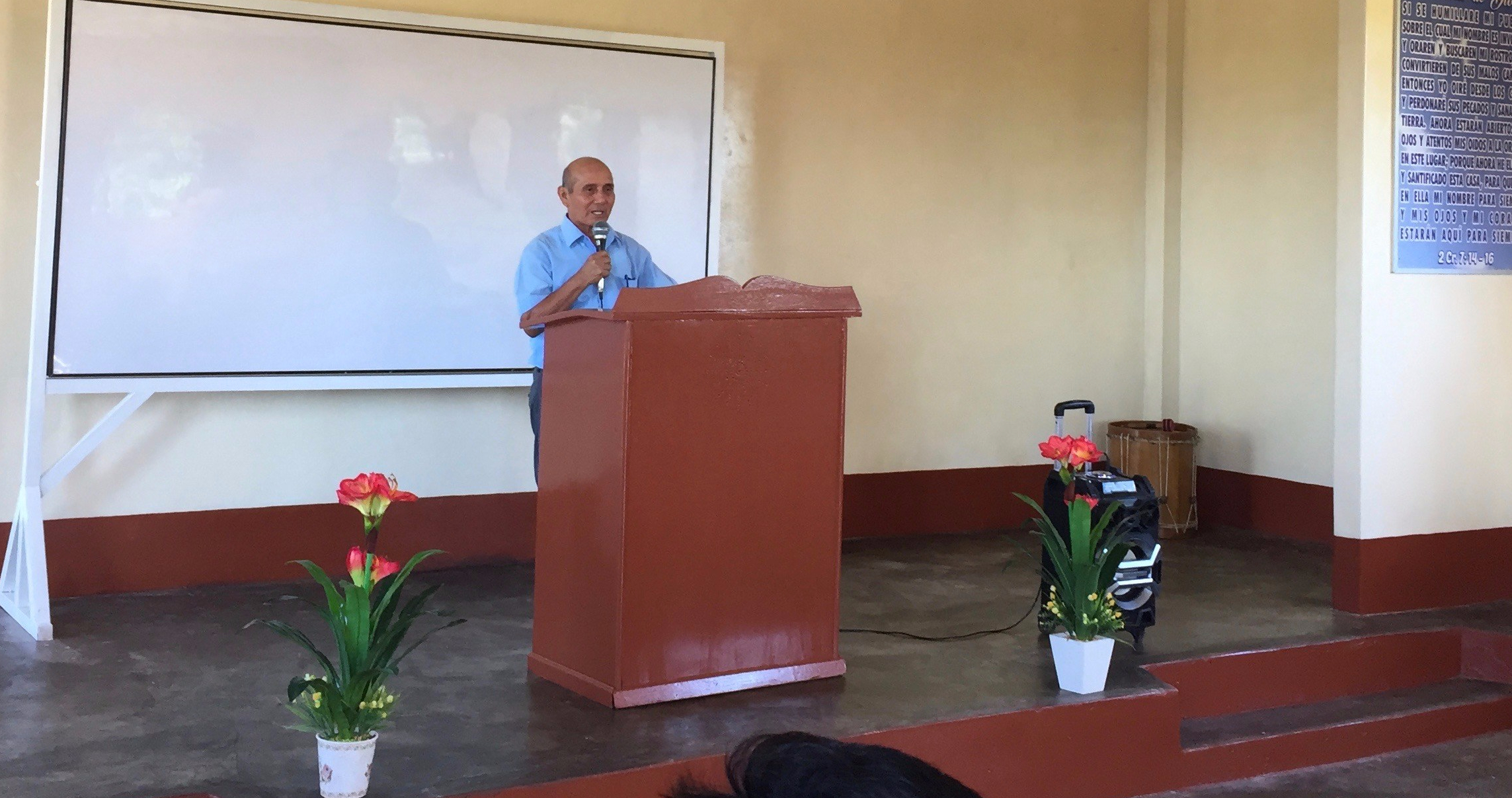
IMG_9929.jpgWe met the pastor of the small community – Pastor German (“Herman”) and his wife, Enith, and began preparing for the local church service.  From that morning and throughout the next few days, I was perplexed at the small size of 8 or so adults attending services or classes.  There were very few young adults, a couple of teenagers, and around 30 children.

Why was I disappointed with such a small crowd?  Comparing one mission experience to another might be the reason.  But I think there’s another: I’ve been hearing about the ministry partnership of Westminster and this community for 6 months – and understanding that it’s the result of 15+ years of annual trips, projects, and outreaches.  So after all this time, I thought there would be “evidence” of the investment. Sure, I met folks who were active – even one man who is a new believer and becoming a vital part of the community and church.   And he is awesome!  But I was left with a nagging curiosity to uncover something else.

Pastor German
Pastor German preaches on a Sunday morning in Santa Clara

It took all week – really until the last day – for me to understand the call we have to this ministry.  As Pastor German rose to share parting words and to honor Dr. Paul for his 16 years of trips, he shared a story of a ministry-friend who had once been close but stopped coming or calling German in the recent years.   “I hope we do not lose touch,” he said as he reflected on the blessing of their partnership.  With gratitude and a tinge of sadness, he and Paul said their goodbyes.  The mantle of “trip pastor” was being passed to me…and I finally understood what I was there to witness and bring back.

You see, this man (and his wife and family) had been faithfully serving this community for years.  This calling they have carried is one of loneliness, harsh criticism, rejection.  There was never a moment of radical growth.  Just families who came and went. It’s a ministry filled with fragile faithfulness – one that the enemy teases and pokes until others in ministry would normally walk away.  I think I would have!  But…

He has never walked away.

So God says, “you won’t either, Justin.”  Supporting this man of God means that as long as the Lord allows it, we will endure with him.  We will suffer through the disappointments.  We will celebrate the new believers.  We will build a fence, assemble some water filters, or teach some classes.  We will go.  We will listen to the vision and we will beg heaven to chase every person down in Santa Clara.

It will seem foolish to many.  I’m sure I will even have my doubts some years.  But we partner and support this Pastor.

I can’t wait to get to know Pastor German more – and the family and friends who will continue living out the Gospel in Santa Clara.   And I will keep asking God to give us the faithfulness to walk with them.

Learning to Pray

I’ve always found prayer to be one of the spiritual disciplines that everyone wants to improve on.  We often think of prayer as the times we give God our words and thoughts.  Sometimes we mistakenly try to “update” God on the comings and goings within our minds and neglect the truth that his omniscience clarifies this thinking as foolish.

So then, what are we doing when we pray?  We are entering before “God’s throne of grace with confidence, so that we may receive mercy and find grace to help us in our time of need” (Hebrews 4:16)  This is done in full participation of the Godhead: the Spirit delivers, the Son presents, the Father hears and blesses.  This holy dance happens as we pray and somehow experience the cosmic interplay of power, humility, and glory.

I confess that so often I pray because I want to change God – change his mind or move him to act on my behalf or my loved ones.  The reality, of course, is that prayer – true prayer that is aligned with the will of God – will often change me. 

What if we began to pray with this assumption and posture?  What if we as a church prayed expectantly and with hope that the discipline of prayer is not a checklist or debrief of the day?  Instead, I submit, we offer our hearts to God and ask for his Voice to change us.  Not only would this change our private prayer life, but doing this in community (small groups) might lead to richer times of prayer together.  Try asking questions of God and allowing space or silence to wait.  Read the psalms as corporate prayers – as they were intended.  Pray the Lord’s Prayer or psalm as a group and in your own words.  Have someone keep up with answered and unanswered prayers in a group journal, revisiting past entries for celebration or for persistence.

Prayer – both corporately and privately – can truly transform your life and your understanding of God.  Richard Foster once wrote, “In prayer, we begin to think God’s thoughts after him: to desire the things he desires, to love the things he loves, to will the things he wills.”  In this way, we pattern our lives after our Lord Jesus and become more like him as well as more intimately know and be known by him.


Until It Becomes Your Own

Watching an infant baptism can be quite mesmerizing.  At a glance, it might seem to be another “church ritual”.  And depending on the tradition you grew up in, it might raise some theological questions.  Just recently we participated in such a celebration as one family (someone who grew up at Westminster and said her ‘yes’ to Jesus here) presented her child for this covenant-making ceremony.

This experience can be deeply impactful for our community.  There will be those who join this family in adult Bible study and volunteers and nursery workers who sing lullabies and whisper-sing “Jesus Loves Me”.  Some of you even will tell the Story of Jesus through Scripture-infused song and projects at VBS, coach and mentor with basketball teammates, guide and challenge at youth retreats, build trusted relationships through Community Groups. Through it all, they will see Jesus.

There is a line from a baptismal rite from the French Reformed Church that gets me every time.  After reciting the great deeds of heaven and mission of God to rescue mankind, the pastor says,

“…All of this was done for you, though you do not know any of this yet.  But we will continue to tell you this good news until it becomes your own.  And so the promise of the gospel is fulfilled: “We love because God first loved us.”

In these words, I am mindful that we enter a community experience like no other!  We are storytellers and keepers of the hope found only in Jesus Christ.  Every little child (and their family) who enters into this covenant shall be blessed by our watchful and tender care.  Every young person will be encouraged and challenged to nurture this lifelong relationship with a Savior.  Every adult – no matter how old or young – will bear the Name of Jesus and shine brightly in our community… all so that the next generation will discover life in Jesus Christ.

In doing so we are not participating in a “ritual”.  Instead, we are enjoying God and making Him known.

How Should We Feel?

Like most of America, I sat through the results of the election last week with anticipation and concern.  In my 20 years as a voting adult, I’ve never felt this way.  Of course, I’ve dabbled in both hyperabsorption and abstinence of the media’s coverage.  The result is the same: I don’t know how to feel about all of this (– probably because I feel too much).

A few days later, Holly and I ran through some of her favorite communicators and their topics.  She shared that one in particular – an author gaining in national renown and encouraging thousands of women daily by her posts and speaking – recently confessed her love for another woman.  It was the first time I witnessed a Christian woman/leader redefining her sexuality on such a public stage.

Now, there was no “coming out” parade.  Conversely, there were no heralds of blasphemy or rebuke.  She simply identified that she is in love with a (particularly well known – besides the fact) woman.  I asked Holly, “How does this make you feel?” And she said, “I don’t know.”

To use the word confused would certainly come to mind for me.  But I don’t think it’s that really.

inside_out_emotions-03So let’s look at the Inside-Out top 5:  Am I sad?  Not exactly, it’s hard to be sad for someone who feels the love from companionship when she never thought she could.  Am I happy?  No.  Angry or afraid? Not really.  Disgusted?  Not at her choice, but maybe at how it’s being easily accepted by the Christian community.

I think we struggle with our feelings on the current climate of political discourse and those of sexuality, gender identity, and relationships because we stress too much how we ought to feel.

The reality is we ought to feel a lot.  It’s how God made us.  In the beauty of his divine design, He bestowed upon us the attributes of himself – physically and emotionally.  We understand this in its base form when someone says they have “fallen in love”; we recognize the beauty of that sentiment.  God is love (1 John 4:8), so the recognition of “love” is something – at least in our basic English understanding – beautiful.  However, if I were to say (and I’m not!!!), “I love my wife…and I love another woman” – this stirs concern in you and rightfully so.  As a result, I hope, you would articulate a loving, biblical response and walk with me through grace and truth.

biblical response here is key.  In the example above, we know of God’s best for marriage because of His Creation narrative as a design of holy companionship (Gen 2:24), which I understand as between one man and one woman.  But that speaks only to my covenant relationship, not my feelings.  So it will take a concerted realignment of my heart to understand that even though I love this hypothetical other person, it is outside of God’s design for my holy relationship with Holly.

I end my thought here with this: our feelings usually influence our opinions.  Our opinions, then, are simply that… ours.  This means they will continue to conflict with each other and even our biblical knowledge and tradition because they stem from our own motives and desires.  That’s our world.  That’s our reality.

But there is also another.

In June 2015, the Supreme Court of the United States published their ruling on Obergefell v. Hodges, and as a result, effectively legalizing same-sex unions nationwide. With this new “law of the land” change, I preached a sermon and was terrified that I was supposed to address this monumental decision. Across the country, preachers did the same. Some spoke. Some led their congregations in prayer. Some rejoiced. Some tweeted. And I was silent on the issue.

Later that night, Holly and I visited Passion City Church and joined with thousands in worship. Pastor Louie Giglio admitted what I too had felt, yet his words assuaged my tongue-tied heart. He said (and I paraphrase here), the best thing he can do as a follower of Christ is to read God’s opinions in scripture. And as a pastor, his obligation is to communicate God’s opinions from scripture. He then went on to preach his prepared message.

Now, that doesn’t mean that he or the thousands of pastors across the country sat in silence out of fear or shame of the Gospel. It means that they…we accept the Kingdom reality that God’s opinions are authoritatively set above all others – a matter of fact that will continue to be incomprehensible and incompatible to agnostic intellectuals…or even professing evangelicals. It means that when I lead correctly, I will tell only what I know God gives me to tell. And of my feelings, I can be assured that God understands and allows for me to feel everything I feel about the issues and perplexities around us.

This leads me to prayer and reflection, to examine my own heart, to repent for my actions, inactions, and thoughts. And friends, I confess I do not do this consistently enough. Yet, when I do, this saves me from the abyss of despair, rage, prejudice, terror, or even ecstasy. For as a communicator of God’s authoritative word, I set my mind at ease that I can trust Him and more often than not, accept that my opinions will continue to shift, while God’s will stay the same.

When the day comes when I open my mouth to declare his promises and truth, I want to be the man who will speak what is his and not what is mine. That way, how I feel, will pale in comparison to the power and beauty of what I know to be true.

A Legacy of Discipleship

I imagine the Apostle Paul at the end of his life; his memories of recent years of preaching and suffering are filled to the brim and somehow the corners of his mouth are curling up with an unspeakable joy.

I’m not sure if one can call it “pride” when we describe the satisfaction of churches planted, heresies silenced, hundreds of both Jewish and nonJewish men and women discovering the truth of the resurrected Savior, more than a dozen churches.  Paul could not know in these moments that his letters would pass through the fingers of servants and strangers to reach our minds and encourage our souls.  And yet, that’s exactly what the Holy Spirit worked in him to do.

In spite of the direct impact of Paul’s legacy, we often overlook his initiative to take on future leaders…his own disciples.   Timothy, Silas, Sylvanus, Epaphroditus, Philemon, and others.  And while these men saw Paul as a mentor-figure, he saw them as “co-workers”.  I imagine the honor these men would cherish – to know that Paul thought of them and treated them as men who shared in the apostolic mission to carry his name to the nations:

…the Lord said to Ananias, “Go! This man (Saul) is my chosen instrument to proclaim my name to the Gentiles and their kings and to the people of Israel. 16 I will show him how much he must suffer for my name.” Acts 9:15-16 (NIV)

Such a mission! To carry his name. His holy, weighty, powerful, majestic, life-giving name.  It was on this name…on this person…that Paul claimed all of his churches are built on him.  In perhaps one of his more famous metaphors for the church, Paul describes the people of God as a building:

Through God’s loving-favor to me, I laid the stones on which the building was to be built. I did it like one who knew what he was doing. Now another person is building on it. Each person who builds must be careful how he builds on it. 1 Cor 3:9-11 (NLV)

The Greek here is arkitekton – that’s right, the architect.  The head-designer AND builder.  Paul looked at Christ as the perfect foundation and then chose the best human-materials to build the rest.  (Not “best” as in worthy, but best as in the best available resources.)

So, friends, where do we do this?  By looking at those whom God has placed around us.  We invite one, two, five, (maybe even!) twelve people into our lives to learn and grow with us.  And we reject the notion that we have nothing to offer the kingdom.  For the ungodly lies seek to thwart our disciple-making work with..

…because of my past,
…because of my sin,
…because I’m too young,
…because I’m too old,
…because my wounds are fresh,
…because I’m not a good teacher.  (and on and on…for we will never run out of excuses)

It does not matter if you call yourself a discipler, a teacher, or a mentor.  What matters is that you BUILD UP the kingdom with fellow stones.  What matters is the obedience to multiply God’s family.  What matters is the community that becomes more creative, breathtaking, and dynamic all because we never give up on the mission to live like Christ in this world and invite others into the journey.

In this work of disciple-making, remember that the spiritual gifts were given to all to develop a stronger and healthier Christ-centered community:

So with yourselves, since you are eager for manifestations of the Spirit, strive to excel in building up the church. (1 Cor 14:12, emphasis mine)

So let your imaginations fly!  Begin to live into Paul’s vision of the beautiful Kingdom of God that takes the best available materials around you — namely, your neighbor — and creates cathedrals out of common stones.

After all, that’s all Paul was.  Just another stone willing to be used by God.

Holiness in parenting

The following is a 5-day glance at some difficult moments that God has used to bring me back to him…and redeem a father’s heart:

  • Saturday morning – I had the privilege of joining other pastors and worship at a conference.  I was three hours away but getting home seemed to take forever thanks to some hurricane-related traffic.  The reunion at home was perfect; I was both excited to be with my family and rejuvenated from the time with other leaders.  That is, until…
  • Sunday – “I don’t wanna go to church.”  Our day began with feelings of frustration especially as the kids resisted our Sunday morning ritual.  Our morning worship experience went well, of course.  But emerging from our family time in church, I had some fresh urgings to read the bible again with my children at bedtime.  So a plan was set…only to be challenged by the evening meal, not eating+whining drama.  Alas, early bedtime.  “We will try again tomorrow,” I tell myself…no-so-convincingly.
  • Monday – I kept thinking: “We have to read tonight.”  And yet again, we had another battle before bedtime.  In spite of the chaos of jammies, oral hygiene, clean up, etc., we pushed through and actually had “Bible time” —   (although I certainly felt a healthy dose of hypocrisy).
  • Tuesday – This is the day I completely lost my patience.  I’ve heard parents talk about how parenting makes them more patient…but I swear, this is the day when I realize I have none.  Thank God for bedtime… but wait, we have to read before bed. Here’s when it hits me like a tackle from behind, “Justin, you need to pray for them.”
           I realized that in all our daily “prayers” I had stopped praying for them. So hours later, I use my super-stealthy tooth fairy/ninja footsteps to enter their room and fall on my knees.  That night I prayed over them while they slept.
    In some ways, it’s easier, since I do not have interruptions or the need to translate my phrasing to little ears. In another way, it’s more terrifying.  As I bow my head and hold my little boy’s arm, I lay my heart out before God and feel the humbling need to repent of my attitude.  My heart floods again with the love I have and the love I choose to have for these little minions.  I am reminded of my dreams for them… that these days are passing quickly… that there is a day when I will stop raising them.  All I could think (as I wept for my sin) was that they deserve better …and that I needed healing.
  • Wednesday morning (today).  As I write this entry, I have just put Joshua in the car for Holly to take him to preschool only to realize that the Spirit was convicting me:

“Joshua?”  [he begins to get situated in the car.]

“Joshua, can you look at me?”  [I hold his face to look at mine…hoping to get his full attention.]

“Son, I am so sorry for being mean to you lately.  I love you so much and I love the little man that you’re becoming.  Will you forgive me?”  [He nods.  Probably baffled at the words I just spoke.  But I grab him anyway, we hug, and I knew that he knew I said something important for me.]

So I write this today out of a call to authenticity.  For I read and know these words:

For the LORD corrects those he loves, just as a father corrects a child in whom he delights.
Proverbs 3:12  NLT

AND

Fathers, do not make your children resentful. Otherwise, they’ll become discouraged.
Colossians 3:21 ISV

…and I am reminded of the true heart of my heavenly Father and leader in parenthood.

I am not a perfect father.  But I have one.

I am not very patient.  But I am forgiven.

I am not always present.  But He still walks with me.

Friends and readers, parenthood is not about having the correct response and attitude in all encounters with our kids.  It’s about learning about the love of our perfect Parent. The One who raises us and molds us into better stewards of these precious lives.

If you, like me, struggle with your attitude today (or lately), I dare you…sneak into their room tonight and unleash everything on the throne of heaven.  Hold nothing back. Perhaps your child, like mine, is waiting for the same words: “I’m sorry.  Will you forgive me?”  

I for one and am glad my Father is teaching me this on my journey to holiness.

Why “not a corner”

My story in faith includes many of the typical facets of discovery, rebellion, apathy, obedience, courage and doubt. I do not downplay any of these moments – for they are deeply rooted in the trials and explorations of a rich relationship with God.  Yet these glimpses do not capture the magnitude of the greater calling of my heart.

Over the years I have discovered the most confusing thing about being a Christian is the way we try to manage the person of Christ in day-to-day, week-to-week realities.  To many, he is a story or someone to think about for a few hours a week.  Often he is someone who embodies the guilt trips and voices that clamour – “why don’t you pray more?” or “why don’t you give more money away?”

buddy-cornerI have found in both study and in experience that the story of Christ is more than a category to be filed into our emotional file cabinet.  Or another way of looking at it – he isn’t given a corner of my room, (like Buddy sitting awkwardly in Walter Hobbs’ office).  He is not a roommate to divvy up space with – he is the Sovereign and Supreme ruler of all things.  He is Judge, He is Beginning and End.  He is everlasting.  He is love.  He is Lord.

This became clear to me when Brennan Manning quoted Dorothy Sayers in Lion and Lamb: The Relentless Tenderness of Jesus.  Sayers wrote:

The people who hanged Christ never, to do them justice, accused him of being a bore – on the contrary, they thought him too dynamic to be safe. It has been left for later generations to muffle up that shattering personality and surround him with an atmosphere of tedium. We have very efficiently pared the claws of the Lion of Judah, certified him ‘meek and mile,’ and recommended him as a fitting household pet for pale curates and pious old ladies.

The stunning realization of my ridiculous attempt to “pare the claws of the Lion” floored me.   It is as though a stony heart within me begins to cry out. One cannot make declarations of Lordship without yielding every part of yourself to Christ.  And yet we try.  Many make it through an entire lifetime thinking that we gave God “enough”.  But is that the calling into spiritual adoption?  Is that what the faithful live for?  Is that what I want to live for?

I am not saying this has been fully implemented in my spiritual life.  I am saying this is my daily endeavor: to give God everything.  To live fully for his glory and fame.  To belong to the Spirit’s ebb and flow while being used as a weapon to pierce the darkness however he sees fit.