
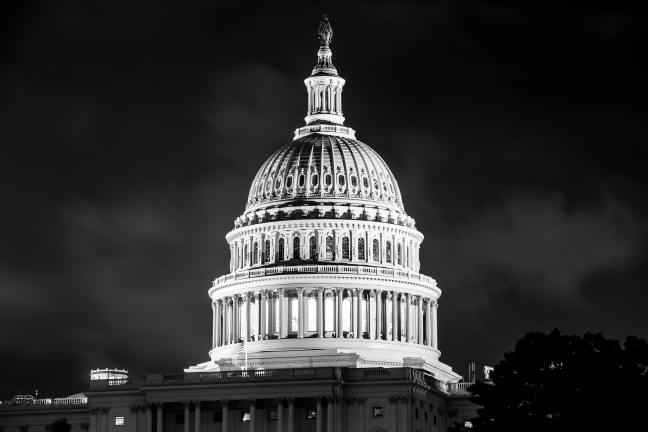
I realize in writing this and posting it to this blog, I’m declaring something that many will object to. I also realize that for the majority of my time in ministry, I have avoided saying what I really think or feel. I ask that if anyone reads this, you would prayerfully discern how human I really am and the tension to be a shepherd in God’s kingdom, not a political leader in our society – although I admit there should and will be intersections of both realities.
After the events of January 6 in Washington DC, my daughter looked at my wife and me and said, “so, obviously you’re Democrats, right?” I could see how the language and word choices of our conversation about what happened that day had led her to believe this. Without hesitation, I told her, “no, I’m independent.” And then I tried to explain how every election is a crisis of moral conscience – and how nothing is black and white for me.
I once polled a Sunday School class I was teaching with the question, “should a pastor his/her voice political concerns?” The response was an obvious 50/50 split. Therein lies the conundrum for me. On one hand, “politics” simple means issues surrounding society and people. On the other, “politics” assumes a party agenda – a slate of issues that one group finds agreement on.
Now, for most contexts of the Church, we find ourselves in conversations surrounding morality. We look for biblical guidance and its authority to discern God’s opinion on our world. And then we try to live in that opinion, aka “His will”. When it comes to the array of issues with abortion, civil rights, human sexuality, immigration reform, economy growth, healthcare, and foreign relations, the Bible is not silent. But how people interpret the contexts and applications are debated on scholastic and more personal levels. This means that our Church’s leaders are going to find common ground and opposing viewpoints.
From a pastoral standpoint, we ask ourselves when nurtures God’s people. And sometimes we ask ourselves what protects God’s people. For the true image of a pastor is found in the biblical imagery of a shepherd. Jesus himself declared that a good shepherd will lay down his life for his sheep (John 10:11). In professing to be the “good shepherd” – meaning the most accurate representation of God’s leader. Peter wrote that God’s people have returned to the Shepherd and Overseer of your souls. (1 Peter 2:25) Invoking this same language, my friend Andy – who is a pastor – recently wrote to his congregation:
I don’t think that pastors should tell people how to vote. My concern here is not the endorsement of political parties. Both of our major political parties are imperfect – neither fully represents a faithful embodiment of the Scriptures. My concern here is that a wolf has walked into the pasture and convinced the residents that he’s a sheep – without even putting on a wool sweater! For some reason when the sheep listen to the wolf, they think he sounds like the Shepherd. As one of the herd dogs, I’m ashamed that I haven’t been barking loud enough.
Citation available by request in order to protect this pastor.
The rub for the pastor who identifies as a shepherd is “when do I bark?” When do I say “this is wrong” or “watch out, a wolf is on the prowl”? When evangelical leaders threw their hat in with Donald Trump, I was admittedly confused. His demeanor and accusations did not resonate with the Kingdom of God nor could this be said of the other candidate(s). And for four years, I’ve watched time and time again as his supporters dig up rationale for his behavior. He divorced himself from facts and championed his authority over courts, elected officials, and constitutional procedure. Even then, I remained silent because his character was always congruent with such immorality.
But on January 6, his staunchest supporters waved “Jesus 2020” flags and behaved with such irrationality that no one thought their mania would reflect poorly on the name of Christ. Such is the psychology of groupthink and an arrow in the quiver of spiritual demons. I want to be clear that my battle to remain politically neutral still persists. I am not convinced of one party’s altruism over another’s. Instead, I rely on the knowledge of the Lord Jesus as my and our salvation.
If you’re reading this, it’s because you know me or you’re trying to get to know me. And in the hopes of developing as a pastor, I ask for your prayers – for me and the other colleagues in ministry who trying to navigate these waters without succumbing to cowardice. On such days as these, political neutraility is not optional. And so, to answer the question posed in the title: No. I do not believe a pastor will always be able to remain neutral. On most occasions, I believe it best to avoid political debate, remaining party-neutral. And in agreement with my friend, I will never tell people how to vote. But I will also never remain silent when my sheep need protecting.
I long for the day when all is made clear on the Day of the Lord and His kingdom truly comes to reign on this world forever. Until then, I remain faithfully hopeful … and a lot more cautious of wolves in sheep-clothing.







 We met the pastor of the small community – Pastor German (“Herman”) and his wife, Enith, and began preparing for the local church service. From that morning and throughout the next few days, I was perplexed at the small size of 8 or so adults attending services or classes. There were very few young adults, a couple of teenagers, and around 30 children.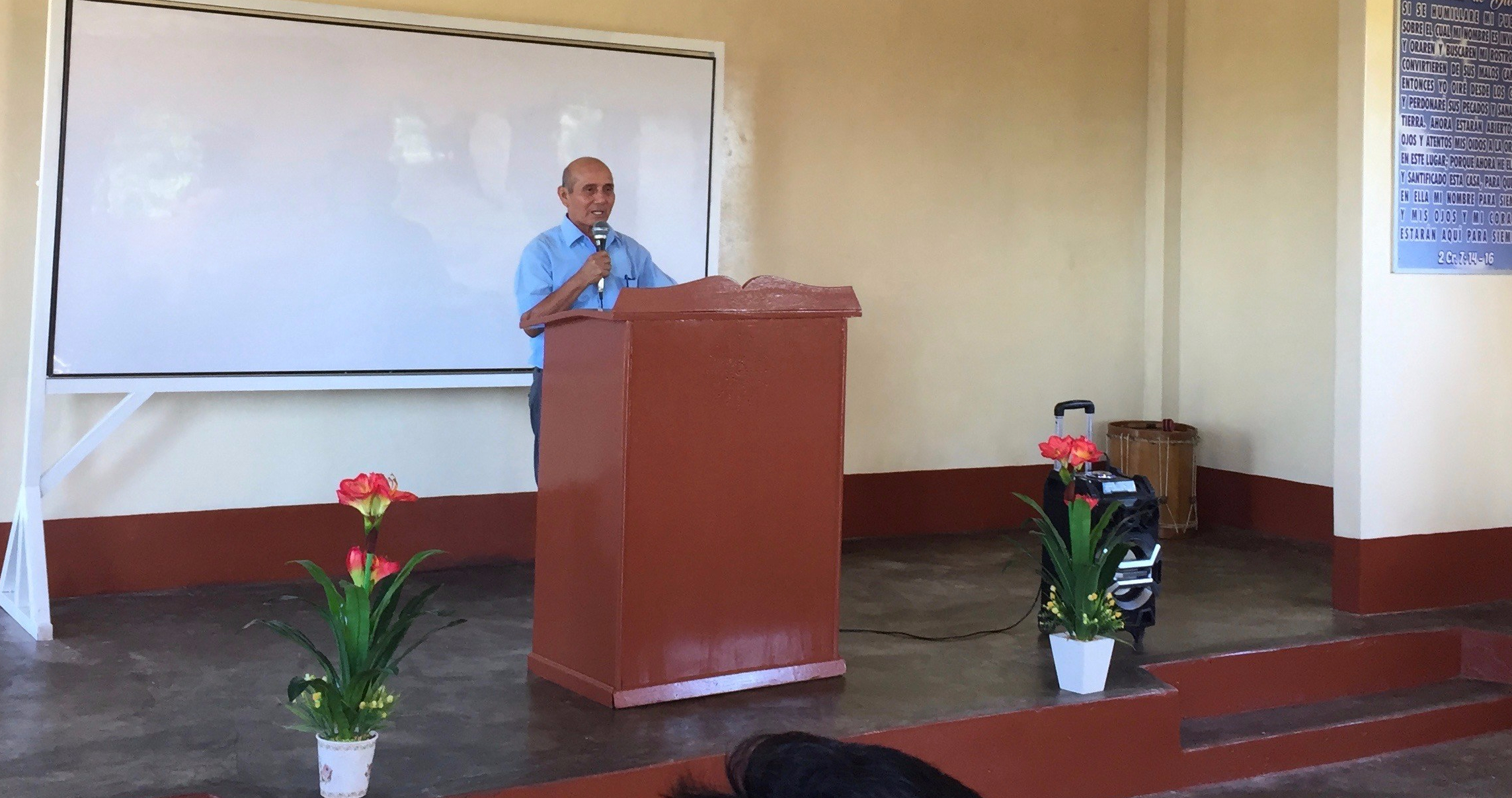
 Not Just a Corner